
With property values continually increasing across Australia, it’s no surprise that many homeowners are looking to sell their properties and take advantage of the market trends. Whether you have a “forever home” that might not turn out to be forever, an investment property, or a holiday house that only gets used every now and then, the temptation to sell your property can be high.
So when you organise a building inspection and discover you have foundation problems with your home, it can definitely take the wind out of your sails. It might leave you feeling like you’re on the backfoot before you’ve even begun, and that the chances of selling your property have taken a nosedive. Thankfully, that doesn’t need to be the case. Let’s take a look at how selling a house with structural problems can still be a possibility for you.
What causes foundational damage?

The question of ‘Can you sell a house with structural damage?’ comes down to the damage sustained by its foundational movement. Foundation problems with your property can present themselves in many ways, from cracks in the walls or floor, to misaligned doors and noticeable gaps between the walls and the ceiling. On the exterior of your home, you might find cracks in the bricks, or the walls seemingly pulling away from the house.
Damage to the foundations typically happens because of one of two main reasons:
- The soil beneath the foundations has either compressed or expanded due to changes in its moisture content, causing the foundations to shift, or
- The incorrect foundations for the soil type were laid in the building process, and the inadequacies in the foundation have culminated in structural damage.
Whichever option has caused this structural instability to your home can be rectified through a process called underpinning. But more on that later.
How can I tell if my house needs foundation repairs?
As we’ve discussed previously, damage to the foundations of your home will present itself in a number of ways both in the interior and exterior of your property. To reiterate, those symptoms might include:
- A misalignment of your doors and windows
- Unlevel flooring throughout your home
- Cracks in the flooring, whether tiled or vinyl-covered
- Gaps in the walls, bricks and concrete
- Cracks in the Gyprock and internal linings
Some cracks, such as hairline cracks, may be less of a cause for worry. It’s typically the larger cracks that should be of concern. Additionally, a licensed and experienced building inspector will also be able to determine the quality of your foundations as part of the standard inspection process.
So my house has been diagnosed with foundation damage. What next?
If you find yourself in the position where your house has been diagnosed with structural damage, you’ll likely ask yourself two questions:
- Should I repair my foundation before I sell my house?
- Can you sell a house with foundation issues?
Let’s look at each question in greater detail.

Should I repair my foundation before I sell my house?
If you are looking to get the best possible purchase price for your home, the short answer to this question is an unequivocal yes. Selling a home with structural damage will almost always mean a significant drop in its value, which means you would then need to drop your asking price.
Some mortgage lenders may opt to decline an application if the house is compromised structurally, so potential buyers may not even give your property a second thought. Repairing any foundation damage before you put your home on the market addresses that concern for lenders, which means more buyers will be more inclined to make an offer on your property.
Can you sell a house with foundation issues?
There is certainly nothing stopping you from selling a house with foundation issues. It’s how you go about it that matters. Failing to disclose foundation damage, or downplaying the extent of damage, is never a smart move. The problems will become evident the moment the potential buyers put the property through an independent building inspection. You’ll either end up having to take a significant reduction to your asking price, or lose the sale completely. Being upfront and honest about any structural problems will help to finalise the sale in an ethical and honourable way.
Essentially, you can approach selling a house with structural problems in one of two ways.
- Repair the property before you put it on the market
- Sell the home as-is
The first option, fixing the issues with the home before putting it up for sale, may be an inconvenient one – especially if you need a quick sale – but it’s the option we would recommend. It’s the best way to make the best possible first impression towards potential buyers, and provides you with a better opportunity to get closer to your desired asking price.
One of the most effective methods of stabilising a home’s foundation is underpinning. It’s a process that helps to reinforce the foundations of the home when the foundations have destabilised due to a shifting of the soil underneath. It can be an expensive process to undertake, but the alternative – a house that suffers greater damage due to structural issues left untreated – can be far costlier.
The second option is to sell the property as-is. As long as the rest of the property is in satisfactory condition, the house might appeal to property buyers who see it as a ‘fixer upper’ and want to treat it as a renovation project. Just be prepared that you may have to accept a lesser sale price than what you’d initially hoped for.
Whichever option you choose, in the interests of full disclosure, it’s important as the seller to follow these recommendations:
- Provide buyers with written advice on the nature and extent of any existing foundation damage. Be upfront with them – there’s no point in hiding anything that an independent building inspection will uncover anyway. Otherwise you’ll lose the trust of the buyer and possibly the sale as well.
- Request written acknowledgement from the buyer that they have been suitably informed of any structural problems. This will protect you as the seller, and the buyer as well.
- Be strategic in your dealings with your real estate agent. In addition to having a written evaluation of the conditions of your foundation, you’ll also benefit from obtaining a transparent quote for an underpinning service, a fixed work schedule, an engineer’s report and a workmanship warranty. These documents will better enable your agent to negotiate with potential buyers when it comes to issues around foundation damage or structural integrity.
Does house insurance cover structural damage?
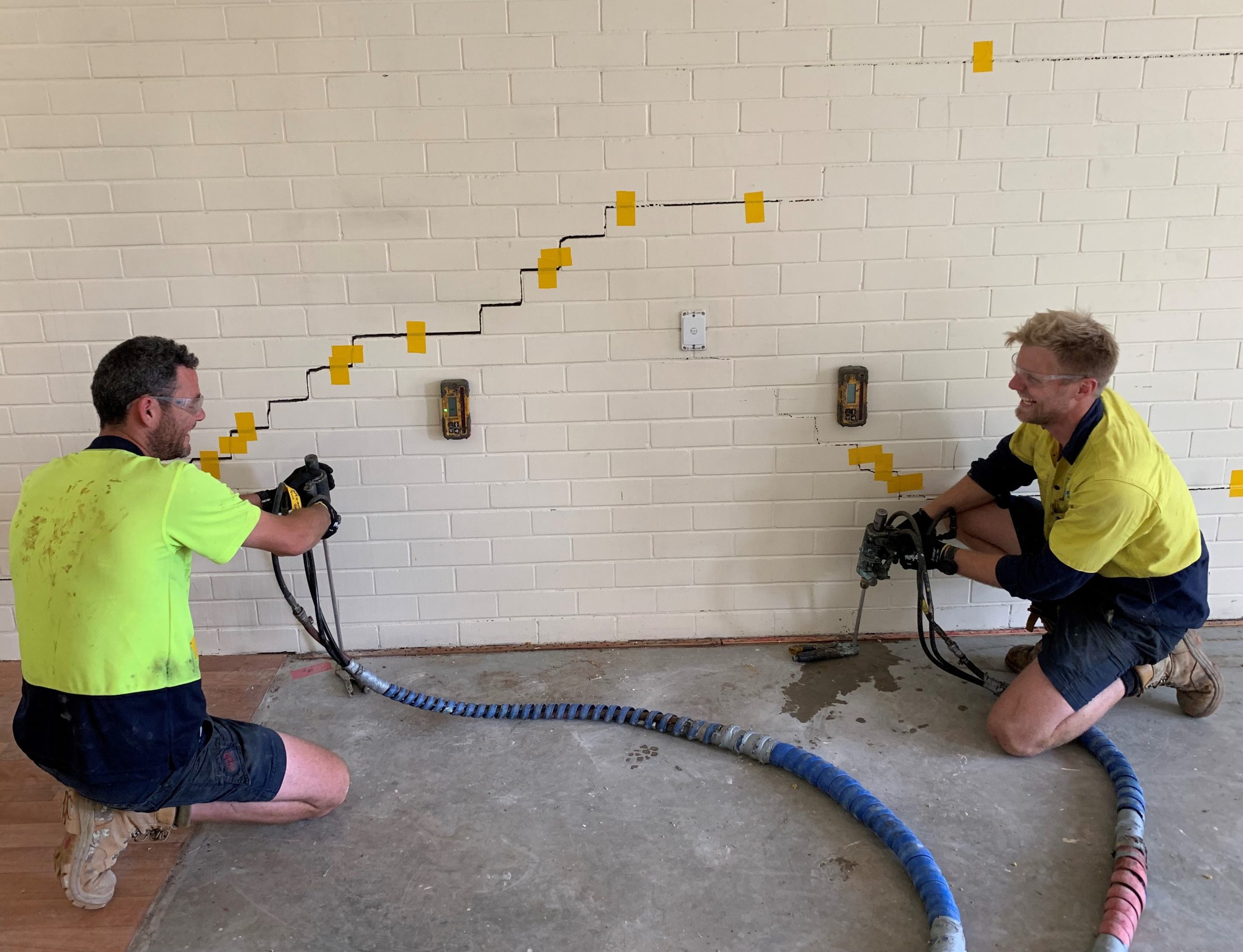
Now you might be asking yourself ‘does home insurance cover foundation repair?’, and it’s a fair question. Generally, insurance providers will only cover structural damage if it is caused by a specific event such as storms and rainwater, fire or significant impact like a falling tree. As long as that event is already included in your policy. They typically won’t cover foundation damage that has resulted from shifting soil (i.e. subsidence), faulty construction or natural wear and tear. As consumer website Compare The Market explains, this is because structural damage should be noticed when you purchase the property, and the damage minimised had the problems been addressed early enough.
It certainly cannot hurt to consult your home and contents insurance provider as each policy is different, but generally if the structural damage isn’t the result of a specific event that your house is already covered for, you won’t likely be able to claim it now.
To sum up…
Foundation issues and structural damage are by no means a death sentence for your dreams of selling your property. You can either fix the problems with your foundations before putting your home on the market, through the process called underpinning, or sell the property as-is. What is important is that you’re upfront with any potential buyers about any existing structural issues, and can provide written documentation about any repair work if that documentation is requested.
Resinject provides comprehensive underpinning services to help restore stability and structural integrity to your home. To request a free, no-obligation quote, get in touch with us today.