The dream of living or working in a waterfront property is one that appeals to many home and business owners. It’s important to be aware though that your property will need some additional support in the form of a revetment wall. If your property is situated close to the ocean or a river, the potential for water damage or erosion to its immediate surrounding environment increases. A revetment wall provides protection against soil erosion and, in doing so, minimises the likelihood of subsidence and erosion.
Though a revetment wall is designed to lessen the impact of water and minimise the likelihood of erosion, it’s only as good as its construction. If water gets behind your revetment wall, it can cause the soil behind it to settle and subside. This can lead to the sea wall being compromised and deeming the waterfront potentially hazardous.
If your revetment wall is sinking or compromised, it’s time to get in touch with Resinject to remedy the situation
Causes of Sinking Revetment Walls
Subsidence of the soil supporting your revetment wall should be a cause for concern that requires your urgent attention. There are numerous causes of subsidence; a comprehensive assessment by a structural consultant will be able to determine the most likely cause and the necessary course of action to fix it.
Among the possible causes of your revetment wall subsiding are:
- Flooding and excess water – the moisture level of the soil is likely to increase due to the presence of water, whether it comes from the waves of the ocean, the flooding of a river, or even poor drainage on your block of land. That increased moisture can result in the soil behind the revetment wall sinking, causing the wall to sink as well.
- Erosion – small waves that take the water to the base of the revetment wall have the capability of permeating the structure, particularly if it is aged or poorly constructed. As the waves move back to the ocean they erode the soil. The waves take away the finer soil granules, causing the remaining soil to destabilise and in turn compromising the structural integrity of the wall itself.
- Extreme weather – weather events such as severe flooding or heavy storm activity can significantly alter the moisture level of the soil behind the revetment wall.
- Soil types – the composition of the soil that your property is built on and that supports your revetment wall can have a significant effect on how it responds to factors that cause subsidence. For example, if the wall is supported by reactive clay, this type has a tendency to expand when moisture level increases (highly likely if you’re in close proximity to a large body of water), and contract and crack if it dries out. Both expansion and contraction can cause soil to destabilise and subside.
- Tree roots – if there are trees or other forms of vegetation near the wall, they will draw out the moisture from the soil supporting the structure.
- Construction – any major construction or development works occurring near your property can cause vibrations that can lead to downward movement and possible subsidence of the soil behind your revetment wall.
If any of these seem potentially applicable to your situation, give Resinject a call and organise a complete structural assessment.
Signs Of Compromised Revetment Walls Or Sea Walls
A compromised revetment wall can cause surrounding infrastructure to be unsafe. A revetment wall that is susceptible to subsidence can cause any structures along the waterfront to collapse due to the weakened and sunken soil. Knowing and being able to identify the signs of a sinking or sunken wall is vital to having the best chance of maintaining its integrity. Those signs include the following:
Cracked walls
Sunken or compromised foundations
Uneven ground
Sinkholes
Unlevel structures
How To Fix A Sinking Or Compromised Revetment Wall
When you need to fix a sinking or compromised revetment wall, you need to fix it as soon as possible. Delaying the repair will both devalue your property, asset or infrastructure, and can potentially make the problem both worse and more expensive to fix.
If you’re considering placing the property on the market, potential buyers will want assurance that the property and any structures that support it are structurally sound. Subsidence puts the revetment wall at risk as well as any retaining walls and other structures along your property. A red flag like this will have a negative effect on the value of your property.
Resinject offers a smart and sustainable solution that provides the support your revetment wall needs to continue safeguarding your property from subsidence. We inject a non-toxic resin called RSJ170 into the affected area of soil. This resin then expands outwards and downward, stabilising and consolidating the soil so it can continue to protect the structural integrity of the revetment wall without causing harm to the surrounding environment.
"*" indicates required fields
Recent Revetment Wall Repairs we have completed
The Benefits Of Using Resinject RSJ170 Resin Injection
The process of injecting our Australian-made, RSJ170 resin product to remedy a sunken revetment wall offers a multitude of benefits.
- Resin injections offer a cheaper alternative to conventional underpinning techniques
- It’s a non-invasive process that requires no major excavation
- The product is non-toxic and therefore not detrimental to the environment
- It’s a more time-efficient process, typically taking less than a day
- The resin helps to strengthen the soil behind your wall; it fills in any gaps and compresses the founding soil
- The process is backed by a 50 year warranty for your peace of mind
Our RSJ170 resin injection system fixes cracked walls of your property by fixing the cause of the problem (i.e. the ground), re-levelling any unevenness in your floors and foundations, and unsticking any jammed windows or doors – all of which can occur if your property is susceptible to subsidence. For expert service and advice, get in touch with Resinject today.
See what some of our recent clients had to say!
I have cracks everywhere, Resinject lifted and levelled all the cracks. Great experience…
Laura E
Huge shout out to Richard and the team, they were professional and skilful. My floor is looking great…
Melissa B
As a Strata Manager I can confirm Resinject are a brilliant company to work with. Takes the stress out of managing properties…
Jan B
It is now more than two months since Resinject stabilised the foundations of my old house and I couldn’t be happier with the results…
Carolyn S
Resinject level several floors in a few warehouses I own. They are a great company to work with…
Brett P
My experience with these guys has been nothing but first class. From my initial inquiry through to getting the job done…
Graham C
Here’s why you should choose Resinject to repair your Revetment Wall
Combined 100+ Years Experience
50 Year Product Warranty
Licenced
Builders
Certified Australian Resin
ISO Certified 9001, 14001, 45001
Here’s how our repair process works
By injecting our resins, compromised soils will be consolidated and stabilised, allowing for permanent wall repair. Our approach involves:
Prepare
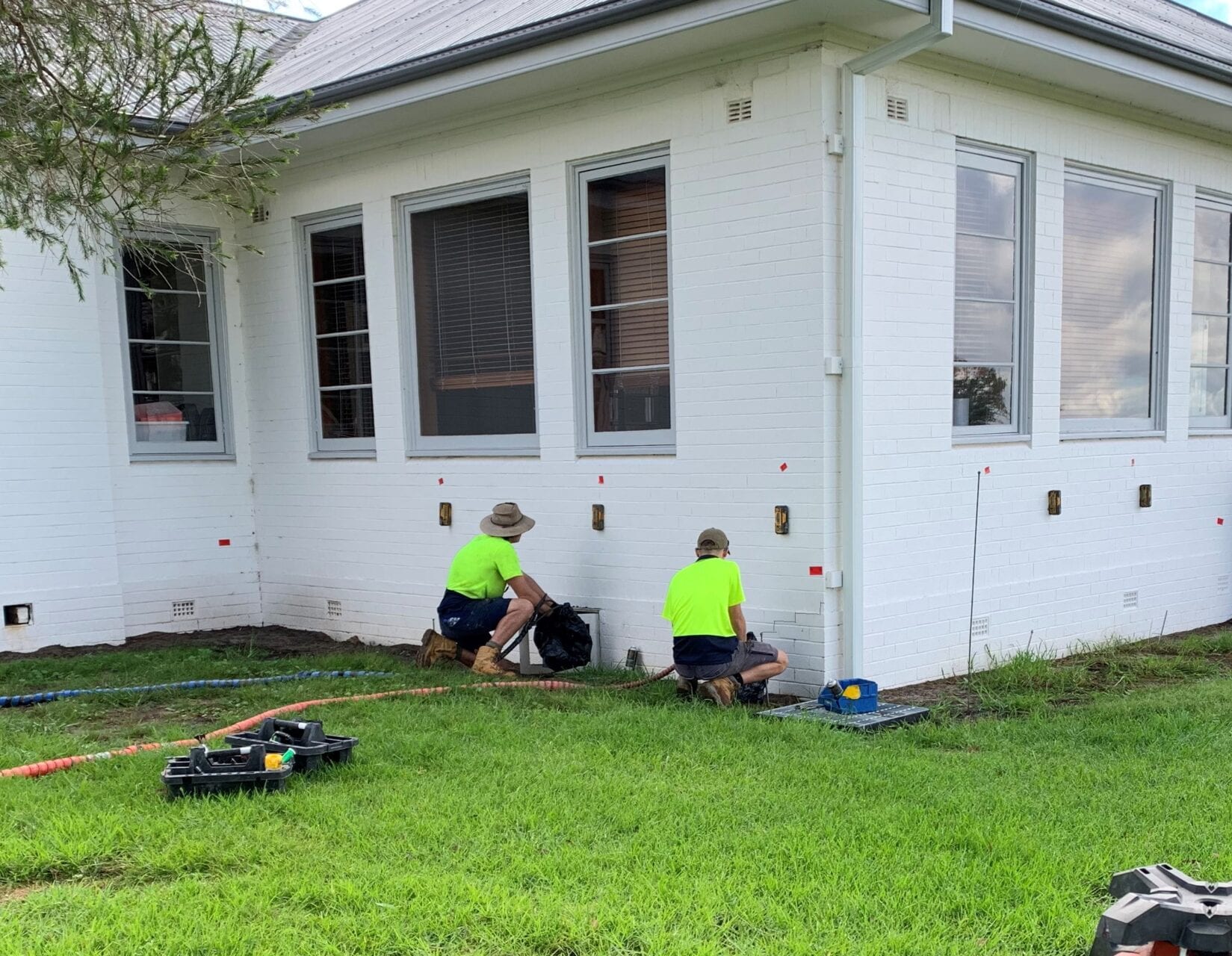
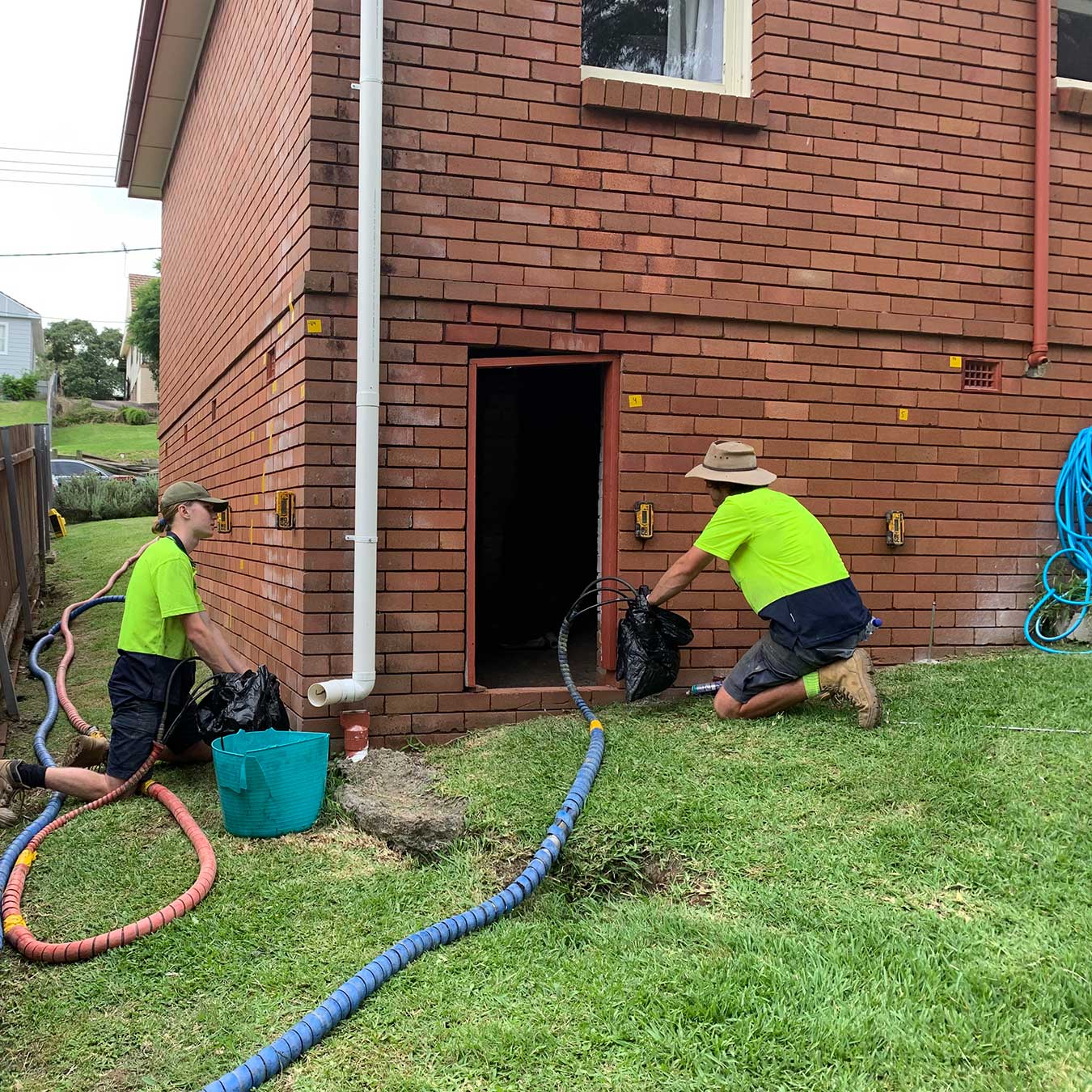
Our experts drill a series of tiny holes in the affected area
Inject
We inject our specially formulated Poly Urethane Resin
Expand
Our Resin fills the voids, hardens instantly which compacts the ground
Result
The area is instantly reinforced and even re-levelled if required
Frequently Asked Questions
Leaving an unstable structure can cause further issues. By having an early assessment/treatment, will save further costs and lessen further damage from occurring.
Most residential jobs are finished within a few hours. Bigger projects may take over a day; your Structural Consultant will discuss the time frame as part of the free site assessment and quoting.
Only a licenced builder has the knowledge and experience required to assess how a building’s internal structure is going to react to ground consolidation and stabilisation.
With over 100 years of combined experience, Resinject exclusively uses an Australian-engineered resin that can be injected to depths of up to 6.5 meters when needed, ensuring proper re-support is installed. We do offer a 50 year guarantee against shrinkage with our product.
Injection depth can be critical to ensuring long-term ground consolidation. Each situation varies and the injection depth is determined by the state of the ground and or dependant on geo-technical reports. That’s why we inject our resin at multiple and different depths varying between 800mm and 6.5m.
If there are utility services in close proximity to the injection points, we may have to clear some areas for a visual inspection. Otherwise, only small holes are drilled to allow our product to be injected. These are sealed with non-shrink grout upon completion.
Subsidence repair cost varies from job to job as each job is different. When you call Resinject, one of our specialists will complete a comprehensive assessment of the affected area on your property. They will determine the best course of action and provide you with a no obligation free quote for the job.