


Cracked, sunken or uneven concrete paths create trip hazards, look unsightly and tend to get worse with time. Whether it’s a front entry, side access, strata walkway or commercial frontage, path damage rarely stays minor for long. Water finds its way into every gap, erosion accelerates beneath the slab, and what started as a hairline crack becomes a serious safety concern.
Surface patching might mask the problem temporarily, but if the ground beneath the path has shifted, settled or washed away, the cracks will return. Resinject’s approach targets the cause, not just the symptom. Using engineered resin injection, we stabilise the supporting ground, fill voids beneath the slab and re-level sunken sections where the concrete is still structurally sound. It’s a faster, less disruptive alternative to ripping out and replacing the entire path.
What Causes a Cracked or Sunken Concrete Path?
Most path damage starts below the surface. The slab itself is only as stable as the ground supporting it, and that ground changes over time. Reactive clay soils are one of the most common culprits across NSW, QLD, ACT and VIC. These soils swell when wet and shrink when dry, creating uneven support that stresses the concrete above.
Washout from poor drainage or leaking pipes can erode soil and create hidden voids beneath a path. Poorly compacted fill, weak subgrade material and long-term settlement from foot traffic or weather exposure all contribute too. Tree roots sometimes play a role, but moisture variation and loss of support are usually the bigger structural drivers.
Once the ground beneath a path changes shape, sections crack, dip or become misaligned. Fixing the surface without addressing what’s happening underneath is why so many repairs fail within months.
Signs Your Concrete Footpath Needs Professional Repair
Not every crack means the path is failing, but certain signs point to active ground movement or loss of support beneath the slab:
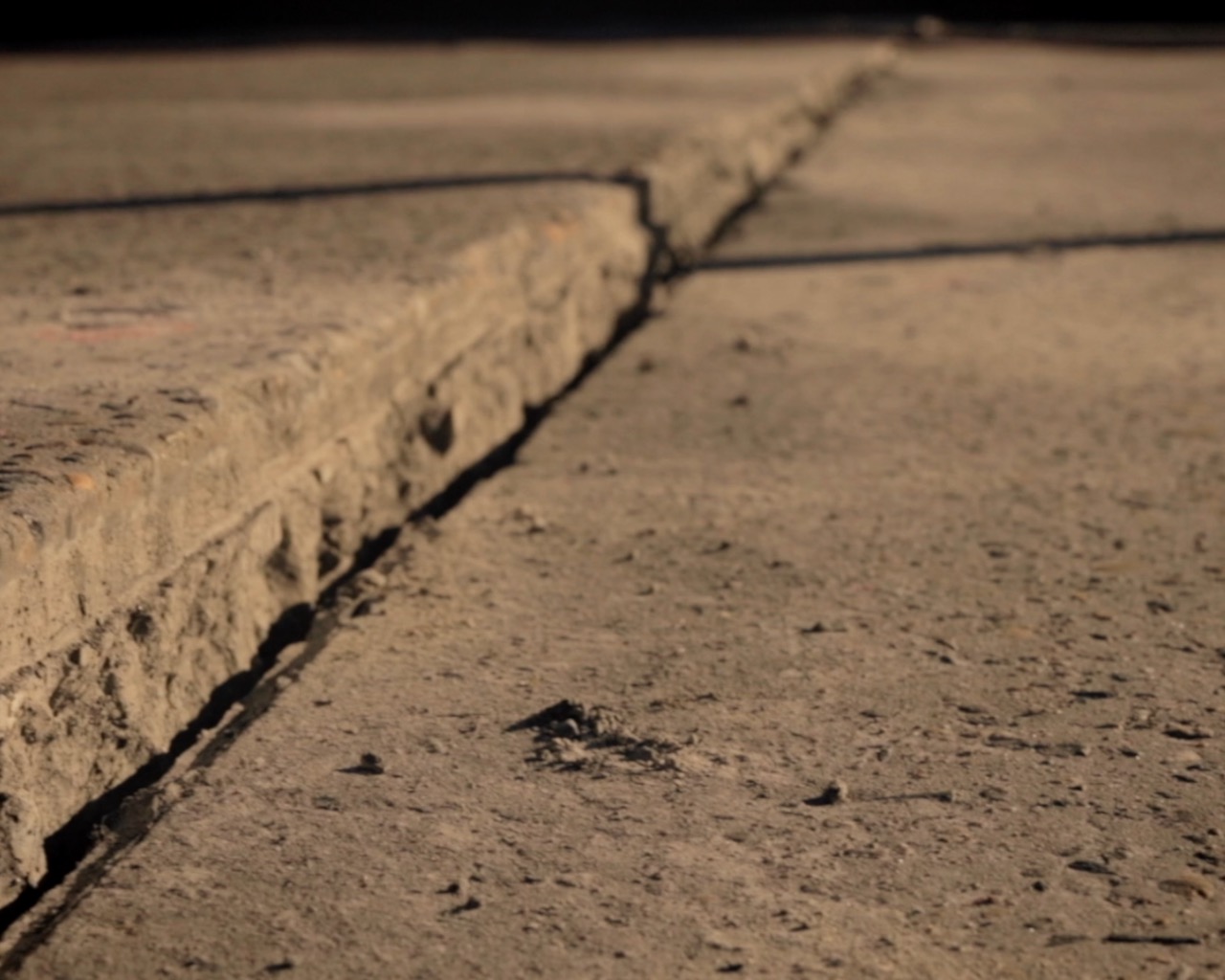
- Cracking across the slab, along joints or near edges can indicate stress from movement or weakened support underneath.
- Sunken sections where one part of the path sits lower than the next, creating a step or trip hazard.
- Uneven slab heights with lipping between adjoining panels, often worsening with ongoing soil change.
- Pooling water on or beside the path, which can accelerate erosion below the concrete.
- Hollow sounds underfoot suggesting voids have formed beneath the slab.
- Recurring patch failures where previous repairs keep breaking down because the underlying issue is still active.
Even small defects deserve attention. Pedestrian safety, accessibility compliance and water ingress can all escalate if left unaddressed, particularly in high-traffic areas.
Early assessment is especially worthwhile where the path serves an entryway, strata common area or commercial frontage. Catching the problem early usually means a simpler, more cost-effective repair than waiting until the damage spreads.
How Resinject Repairs Cracked and Sunken Concrete Paths
Before any work begins, our team inspects the extent of cracking, settlement and likely subsurface conditions. The goal is to understand what’s driving the damage so the repair actually lasts.
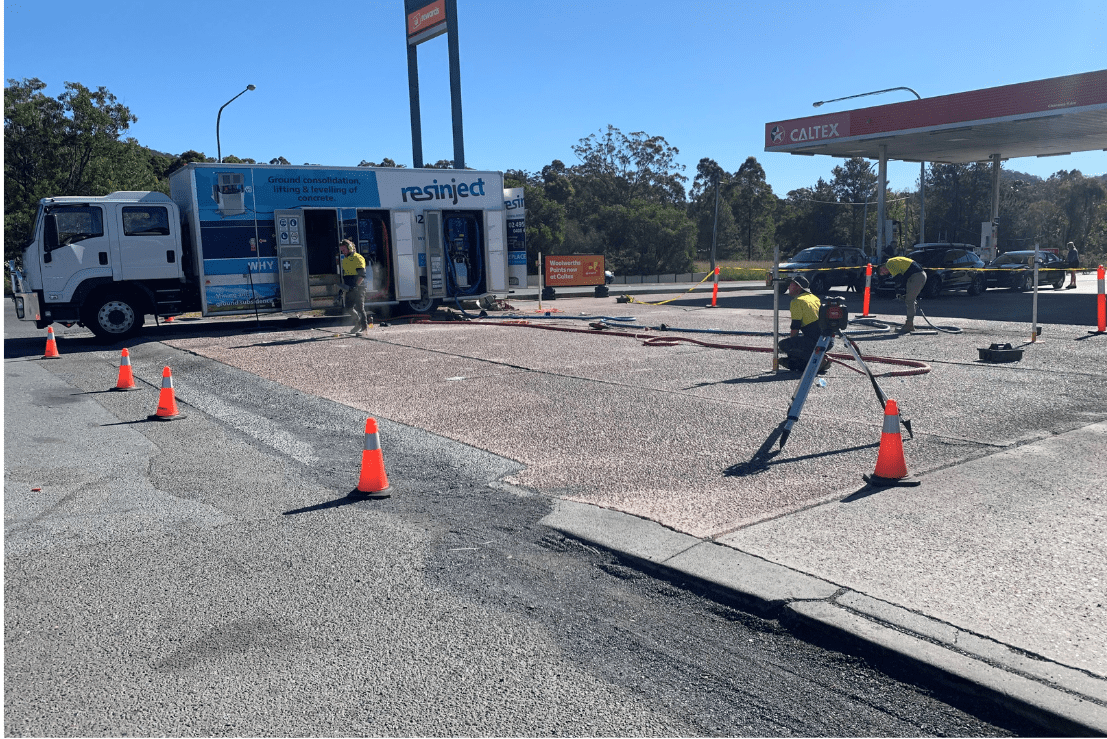
Small injection points are created through or adjacent to the affected slab. Our proprietary RSJ170 engineered resin is then injected beneath the path, where it expands to fill voids, consolidate weak ground and restore support. Where sections have sunk, controlled lift can bring the path back towards level. If cracking stems from slab movement, stabilising the ground first is critical before any surface treatment makes sense.
The process suits residential, commercial and civil settings equally well. Cure times are rapid, disruption is minimal, and there’s no need for heavy excavation. You can read more about the general approach on our slab jacking page.
Book a Free Quote and Structural Assessment
If your path is cracked, uneven or sinking, get in touch for a free assessment. We’ll inspect the site, explain what’s causing the damage and recommend the right repair approach.
"*" indicates required fields

Recent Concrete Path Repair Projects
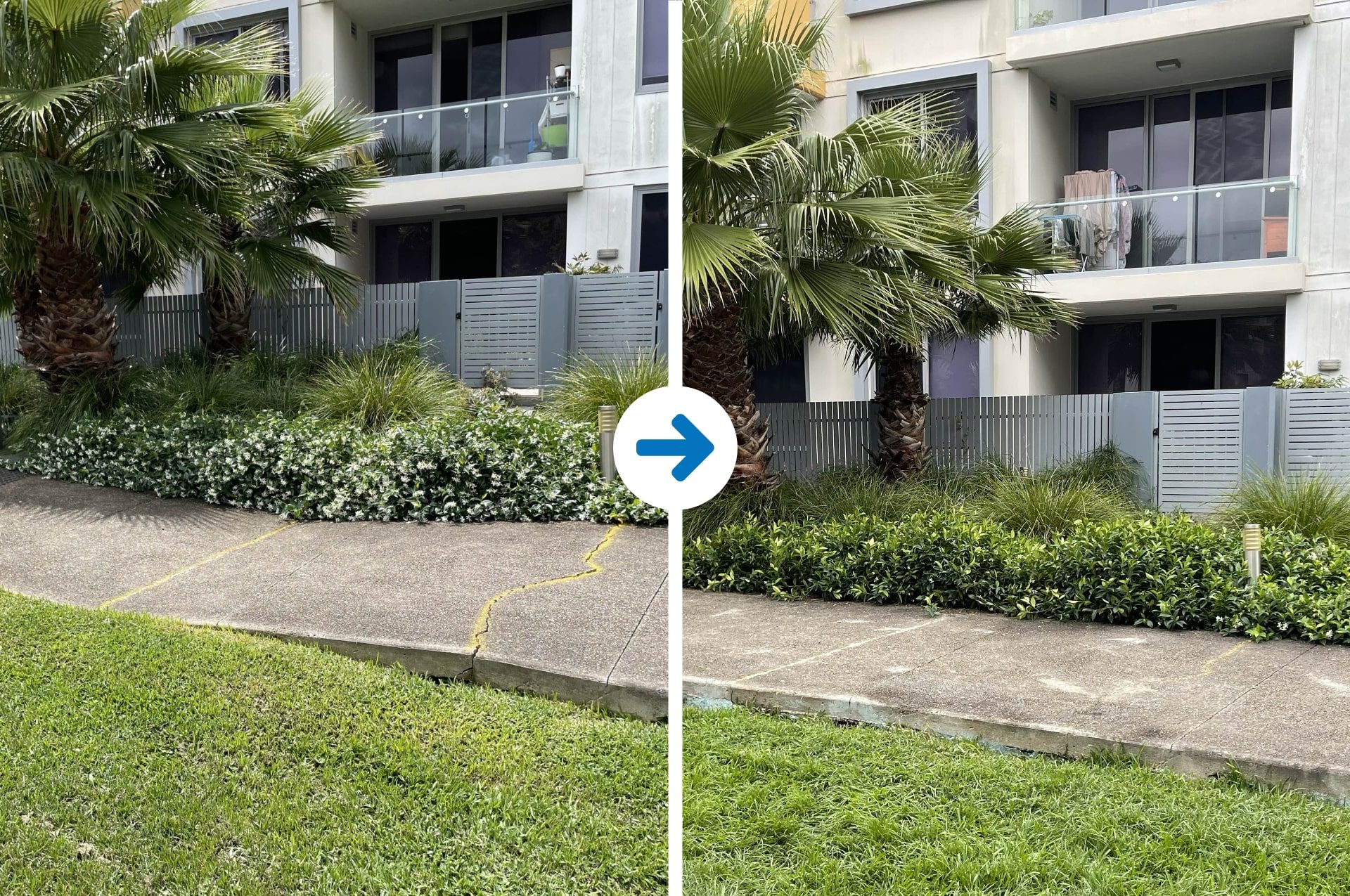


A Long-Term Alternative to Replacing the Entire Path
Not every damaged path needs to be demolished and re-poured. Where the main issue is settlement, voids beneath the slab or weak supporting ground, resin injection offers a lasting repair without the cost and mess of full replacement.
There’s minimal excavation involved, less disruption to landscaping and surrounding structures, and the path returns to service far sooner. Our RSJ170 resin is Australian-made and backed by a 50-year product warranty. All work is carried out by licensed specialists under ISO-certified quality, safety and environmental management systems.
The goal isn’t a temporary patch. It’s lasting ground stabilisation and structural support beneath concrete that still has life in it.
See what some of our recent clients had to say!

I had three quotes for a major slab extension job. Resinject was by far the most comprehensive and detailed in scope. Everything from start to finish was excellent…
Laura M
I highly recommend Resinject. They were the only company who wanted to take on our “difficult sunken concrete” job, without hesitation. These guys know their stuff…
Darren A
Resinject has done a few jobs for my company, the most recent a property with a sunken garage. Again, I was impressed. Every time I will choose Resinject…
Craig H
Great job from Adam and the team, I was really impressed. Pick Resinject every time…
Chris L
It was a pleasure to deal with Resinject when needing to raise a large concrete slab at our home. They were thoroughly professional and used state-of-the-art equipment…
Richard S
My experience with these guys has been nothing but first class. From my initial inquiry through to getting the job done…
Graham C
Why Choose Resinject for Concrete Footpath Repair?

Combined 100+ Years Experience

50 Year Product Warranty

Licenced Builders

Certified Australian Resin

ISO Certified 9001, 14001, 45001
How Our Repair Process Works
By injecting our resins, compromised soils will be consolidated and stabilised. Our approach involves:
Prepare
Our experts drill a series of tiny holes in the affected area
Inject
We inject our specially formulated Poly Urethane Resin
Expand
Our resin fills the voids and hardens instantly, which compacts the ground
Result
The area is instantly reinforced and even re-levelled if required
Frequently Asked Questions
In many cases, yes. Where cracking results from settlement, voids or ground movement rather than complete slab failure, resin injection can stabilise the ground and restore support. The best approach depends on crack severity, slab condition and what’s happening beneath the surface.
Common causes include poor compaction during construction, erosion from water runoff, reactive soils that shrink and swell, and hidden voids that form over time. The slab sinks because the ground supporting it has changed.
It’s well suited where subsurface instability is the main issue. The process involves minimal excavation, cures rapidly and allows controlled lifting of sunken sections.
Long-term results depend on correctly addressing the root cause. If the crack is linked to ground movement, stabilising the soil and filling voids delivers a far more durable result than surface patching alone.
Resinject’s method is designed to be non-invasive. Small access points, limited mess and reduced downtime make it a practical option compared with removing and re-pouring the path.
Many sunken sections can be re-levelled using controlled resin injection, depending on slab condition and site constraints. Our team assesses how much lift is feasible and safe before work begins.
Trip hazards, widening cracks, rocking slabs, pooling water, repeated patch failures or visible sinking all warrant a professional look. Early advice helps prevent larger repairs and improves safety sooner.
