
1. Hairline crack
Hairline cracks are fine cracks, usually around 1.5mm wide. These are often the result of minor settling, or even the natural shrinkage of building materials over time.
2. Vertical crack
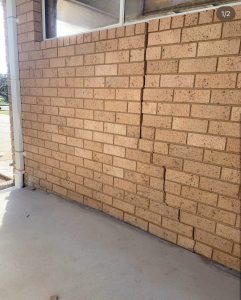
As their name suggests, these cracks usually run straight up and down, perpendicular to the ground. Again, the settling of a structure is usually the cause for this. Vertical cracks in brick walls are often less serious than horizontal or stepped cracks, but should still be monitored if they widen or recur.
3. Horizontal crack
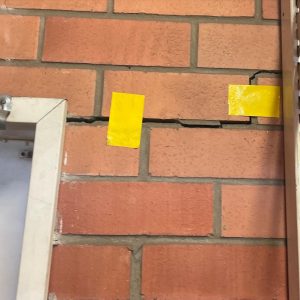
Horizontal cracks run parallel to the ground, and can be more concerning than vertical cracks. They are particularly worth watching in brick or masonry walls, especially if they are widening, long, or paired with bulging. Foundation settlement or lateral soil pressure can be contributing factors, and these cracks should be monitored closely.
4. Stepped cracks (or stair-step cracks)
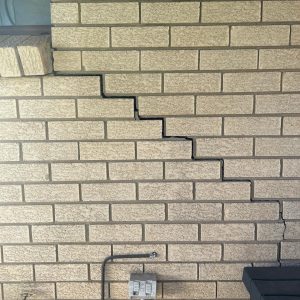
These types of cracks frequently appear in masonry walls, and are usually typified by their diagonal, staircase-like pattern.
5. Cracks around openings
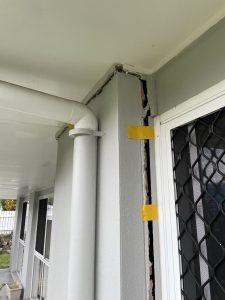
These types of cracks form around windows, doors, and other wall openings. They arise from the stress concentration at these points, which is often the result of poor structural support.
6. Expansion crack
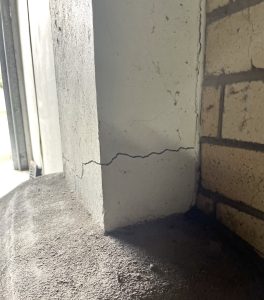
These cracks can occur when building materials like concrete or masonry expand and contract in response to temperature fluctuations or moisture changes. We often see that expansion cracks are wider at the top than at the bottom.
7. Structural crack
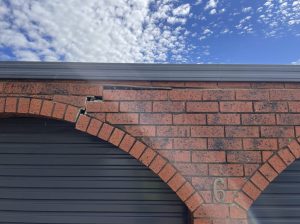
These cracks are generally wider than 3mm and are generally cause for concern as they arise from structural troubles such as foundation issues, movement of soil or perhaps construction deficiencies. These should be evaluated by a qualified professional.
When assessing cracks, it’s important to get a good grasp of their type, size and location to help determine their severity. While it’s true that many cracks are minor and can be repaired easily, some may indicate deeper structural issues that need to be addressed by an industry professional. We recommend conducting regular inspections to closely monitor the health and integrity of your walls at home.
What causes walls to crack?
Walls can crack for several reasons, but these are some of the most common causes we see in the field.
Settlement
This is probably the most common way cracks appear, and the highest chance of what you’ll see in your own home. Settling cracks occur when the soil beneath a foundation compresses and shifts. This is usually the result of natural soil consolidation, poor soil compaction during construction, or variations in moisture levels. Settlement can be uniform or differential, and differential movement is more likely to create visible cracking because different parts of the structure move at different rates.
Expansive Soils
Soils such as clay, can expand and contract significantly with variations in moisture. This can cause ground movement, and therefore, exert pressure on your foundation, causing it to crack. Brick veneer and masonry walls tend to show this cracking more visibly than flexible internal finishes like plasterboard.
Erosion
Erosion is the washing away of soil due to poor drainage or heavy rainfall. When this happens around a foundation it can undermine its stability, and cause the surrounding ground to shift.
Tree Roots
Trees, yes trees. Trees, or more specifically, tree roots, can exert extreme pressure on structure foundations as they grow and spread in search of moisture. In many Australian homes built on reactive clay, roots contribute indirectly by drawing moisture from the soil, causing it to shrink and the ground to move beneath footings.
Underground Mining or Excavation
Definitely less common, but nearby mining or excavation work can disturb the ground’s natural stability, resulting in subsidence or other disruptive movements.
Seismic Activity
This might seem like a given, but Earthquakes and similar seismic events can cause significant cracking due to the shaking and displacement of the ground.
Thermal Expansion and Contraction
Wide-ranging temperature changes can cause building materials like bricks, mortar and concrete to expand and contract, leading to cracking over time. This is separate from moisture-driven soil movement, which is covered under expansive soils above.
Underground Water Movement
Fluctuations in groundwater levels or the flow of subterranean waters can destabilise the ground beneath a structure, potentially causing subsidence or heave. Learn more about the effects of water on your foundations.
Human Activities
Construction efforts, such as excavation for new buildings or infrastructure, can alter ground characteristics, leading to instability.
How to perform a DIY inspection

Here’s how to perform a basic evaluation of your own home.
1. Wall inspection
Conduct a review of your interior and exterior walls. For darker areas, use a flashlight to ensure no cracks are overlooked.
2. Measure the cracks
Grab a ruler or tape measure, and determine the width and length of each crack you identify. Record crack direction too: vertical, horizontal, diagonal or stepped. Make sure you record these measurements to track their changes over time.
3. Document the location
Note down the location details of each crack, such as the room it’s in, interior vs exterior wall and whether it appears in brickwork, plaster, near windows or doors, or on an external wall. It’s also recommended to take photos of each crack for visual reference.
4. Check for additional signs
Be on the lookout for additional signs of structural issues such as uneven floors, sticky doors and windows or gaps where walls meet the ceiling and floors.
5. Monitor changes
It’s imperative to keep a close track of how the cracks change over time in terms of their size and appearance. Review, and take more photos to monitor the progression and provide valuable information to professionals if required.
When should you worry?
Now that you’ve done your DIY assessment, when should you be worried about the cracks in your home?
Identifying wall cracks that potentially pose a threat to your home’s integrity is crucial to not only safeguard your investment, but to maintain a safe living environment. For brick homes in particular, be more cautious where cracks are horizontal, stepped, wider than 3mm, or continuing to grow. Here are some signs which may indicate that cracking might be on the more severe end of the scale, and professional intervention may be needed.
If you notice any of the above, or if you’re generally just uncertain about your current situation, it’s best to consult with a qualified professional who can conduct the necessary assessment to advise if repairs are necessary.
Professional repairs
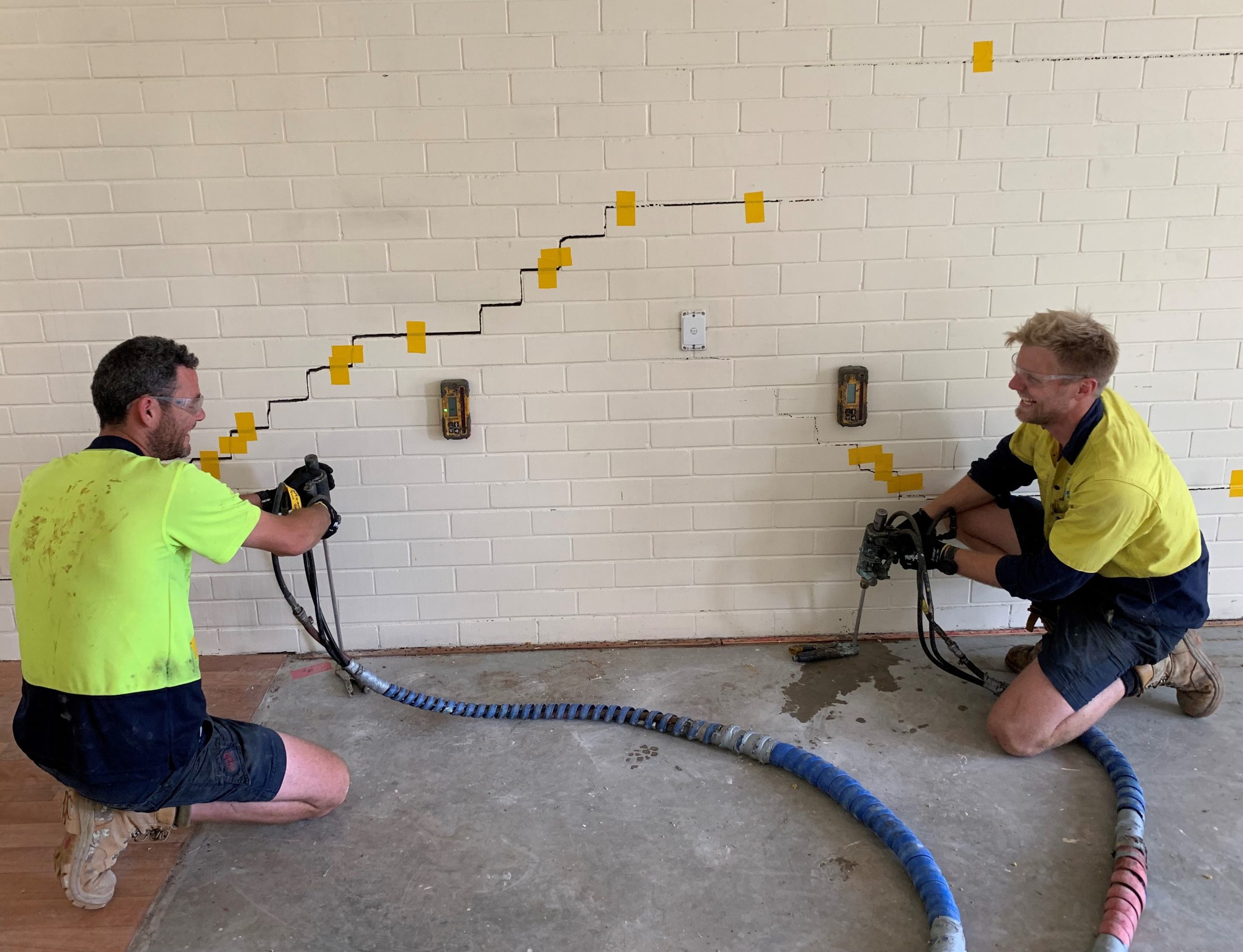
Not every crack needs underpinning or resin injection. Cosmetic cracks may only need monitoring or patching, while structural cracks require the underlying cause to be assessed.
Our team specialises inresin injection underpinning, a durable solution which stabilises the ground beneath your building’s foundation to address the root cause of serious wall cracking. Our method involves injecting a specially formulated polyurethane resin into the soil, which reacts quickly and cures rapidly to enhance load-bearing capacity and helps stabilise the affected ground and reduce the risk of further movement.
For more information, review our wall repair service.
What does wall crack repair usually cost?
The cost of wall repair can vary significantly based on factors such as the extent of the damage, size of the area needing the repair, the cost of materials and labour requirements.
If your wall cracks are minor, such as hairline cracks generated from natural building settlement, repairs are generally inexpensive. The main costs are usually basic materials and tools used for filling or patching the cracked area.
More significant cracks which are the result of structural issues are generally considerably more costly. If this is the case, expect to pay anywhere from $4,000 – $40,000, depending on access, severity, affected area and whether foundation stabilisation is required. Early assessment can help avoid more extensive repairs later.
Some frequently asked questions
Are cracks in the wall normal?
Yes, cracks in walls are relatively normal especially in older homes as they settle over time. Hairline cracks are often not cause for concern, but larger cracks (over 3mm) may indicate more serious structural problems.
Can you paint over cracks?
You can definitely paint over cracks after having them properly filled with caulk, this will ensure you get a seamless finish. We don’t recommend this for larger or structural cracks without addressing the underlying cause, as the problem will more than likely get worse over time and the cracks will reappear.
How do you fix structural cracks in walls?
If you’re concerned that the cracks you’re seeing could be the result of foundation movement, it’s best to get in contact with us. See our wall crack repair page to learn more about our process and get a free quote.
When should I worry about cracks in walls?
You should be concerned about cracking when cracks are bigger than 3mm in width, become wider over time, or are accompanied by other structural issues such as sticking doors and windows or uneven floors. Horizontal cracks, stepped cracks, or cracks near openings are other types of cracking which may indicate significant structural problems that require investigating.
How to know if a crack is structural?
A crack is likely structural if it is wider than 3mm, follows a horizontal or stepped patterns (see our examples above), and is accompanied by other signs such as bulging walls, sticking doors and windows, or gaps at wall joints. If a crack continues to grow or reappears after repair, we recommend a professional evaluation.
Are cracks in the wall safe?
Not all wall cracks are unsafe. Hairline and minor vertical cracks are usually harmless and can be repaired quite easily. Larger cracks may point to structural issues that could compromise the safety of your home, so we recommend having these inspected by a professional promptly.
This is especially important if the crack is changing or showing progression over time.
When should I worry about plaster cracks in Australia?
Whether you find cracks in your plaster or brickwork, the criteria for assessing their severity is the same:
- Exceed 3mm in width
- Show signs of progression over time
- Form patterns like horizontal or stepped cracks
- Reappear after being repaired
- Are accompanied by other structural issues
Can you just paint over cracks in plaster?
Yes, you can paint over small hairline cracks after properly filling them with a suitable filler or caulk. We don’t recommend this for larger or structural cracks without addressing the underlying cause, as the problem will more than likely get worse over time and the cracks will reappear.
How serious are cracks in brick walls?
Cracks in brick walls can range from minor cosmetic issues to signs of foundation movement. Wider, horizontal, stepped or growing cracks should be assessed by a qualified professional.
Do cracks in brick always mean foundation problems?
No. Some brick cracks result from normal settling, shrinkage or temperature changes. Recurring, widening or patterned cracks can indicate an underlying structural or footing issue.
Can hairline cracks be ignored?
Small hairline cracks are often harmless, but they should still be monitored. If they widen, spread, or appear with other movement signs, arrange a professional assessment.