Our Solution:
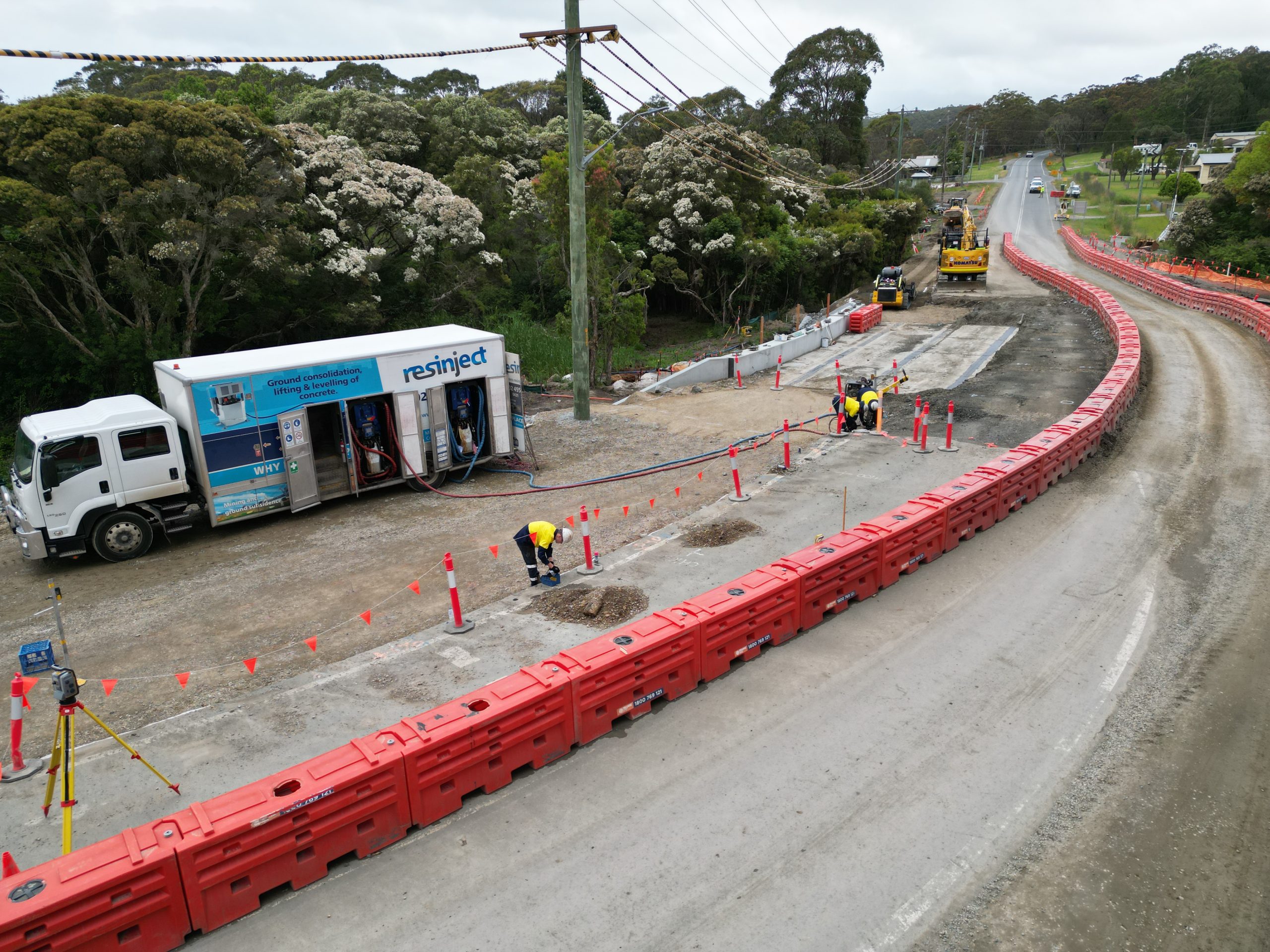
The local Council engaged Resinject to propose a suitable solution to improve the load baring capacity of the surrounding soils and the road. Subsequently, Resinject’s experienced consultants promptly attended the site for assessment and to come up with a treatment plan.
On assessment, it was proposed that an injection program of varying depths be implemented in order to improve the load baring capacity of the road and surrounding soils. It was identified that treatment should occur from up to 3 metres to the road surface.
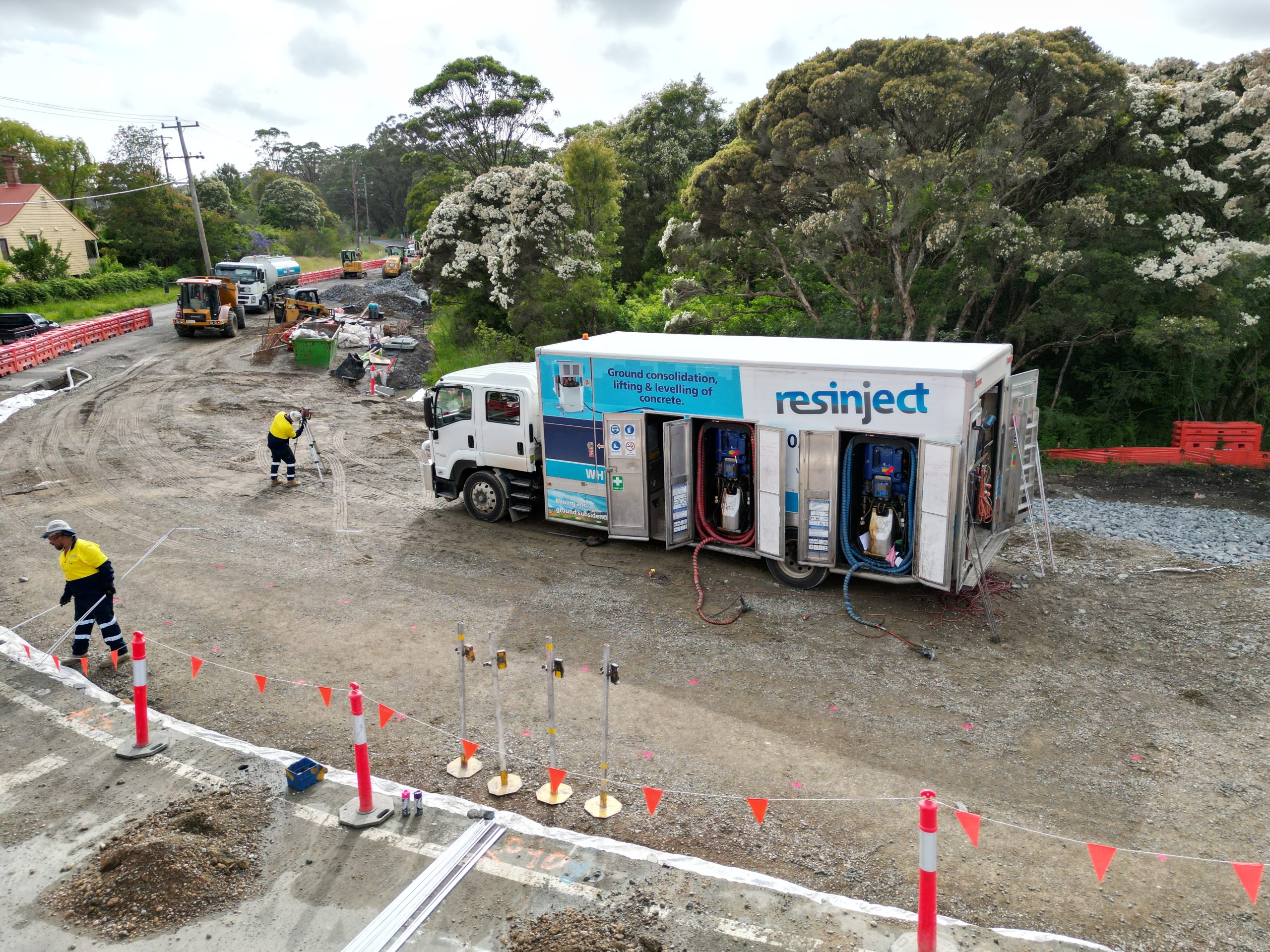
Resinject’s RSJ170 Polyurethane Resin is designed to completely fill any voids and cavities (the main causes of poorly compacted ground) around the targeted injection points. The product travels along the void areas, expanding up to 40 times its original fluid volume. This not only fills the voids and cavities but simultaneously compacts the surrounding fill material, improving its strength and capacity to support any overlying structures.
Resinject’s primary injected Resin product, labelled as “RSJ170”, fully complies with the Roads & Maritime Services M232 Quality Assurance Specification for Injected Expanding Resin Slab Jacking / Stabilisation, and is engineered to lift over ninety (90) tonnes per square metre area.
Council agreed to the proposed solution and Resinject’s services were booked in for shortly thereafter.
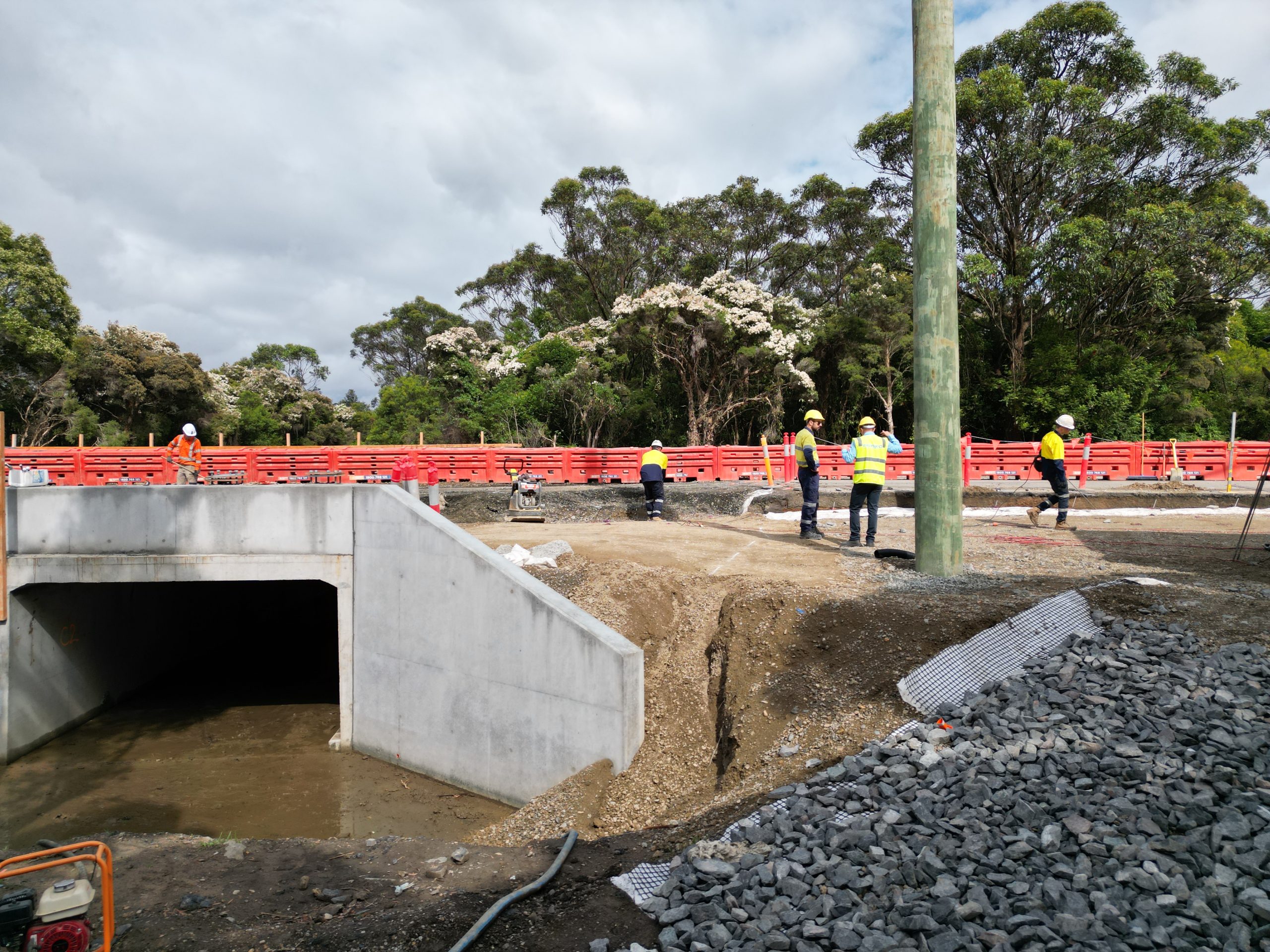
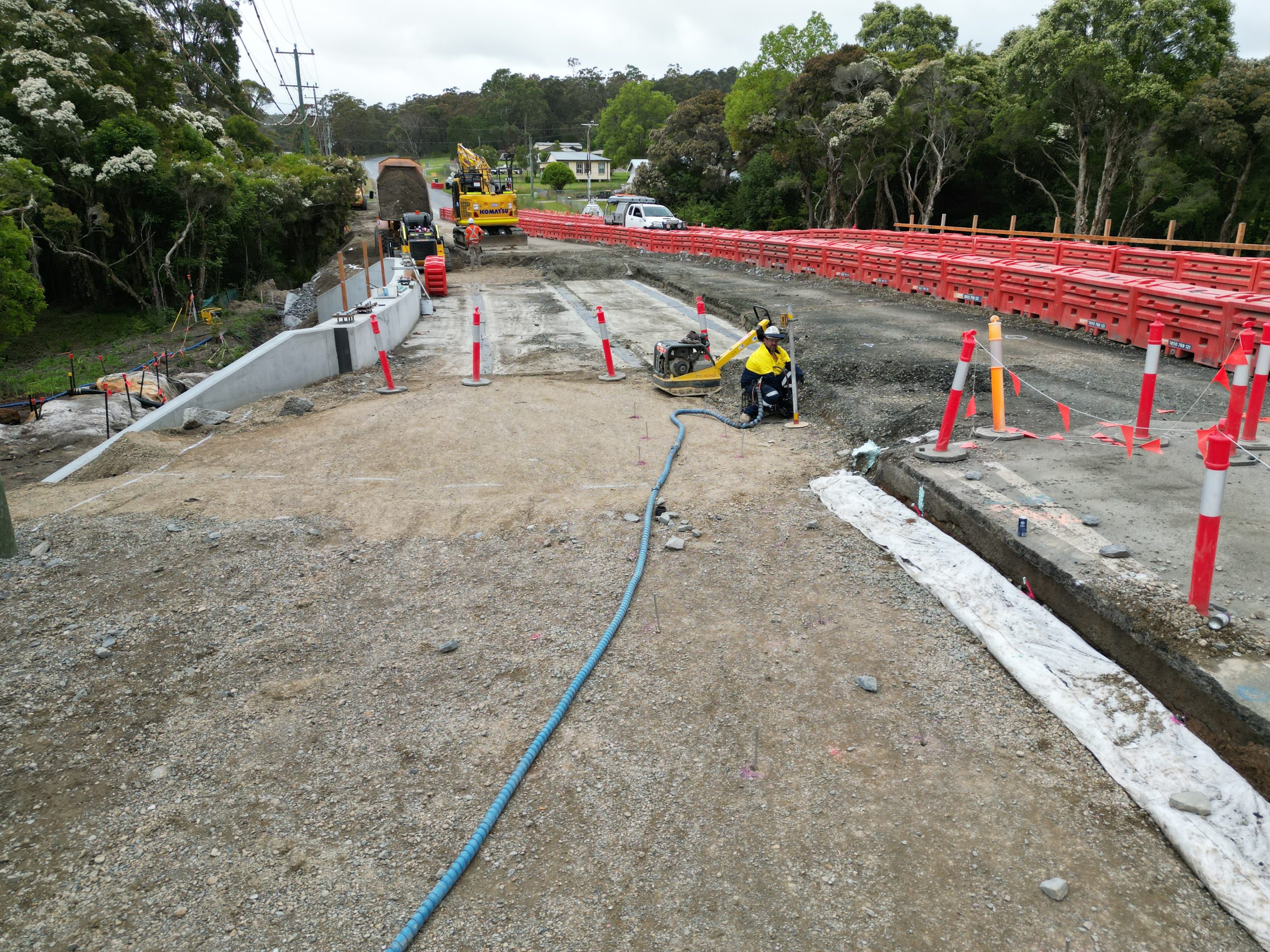
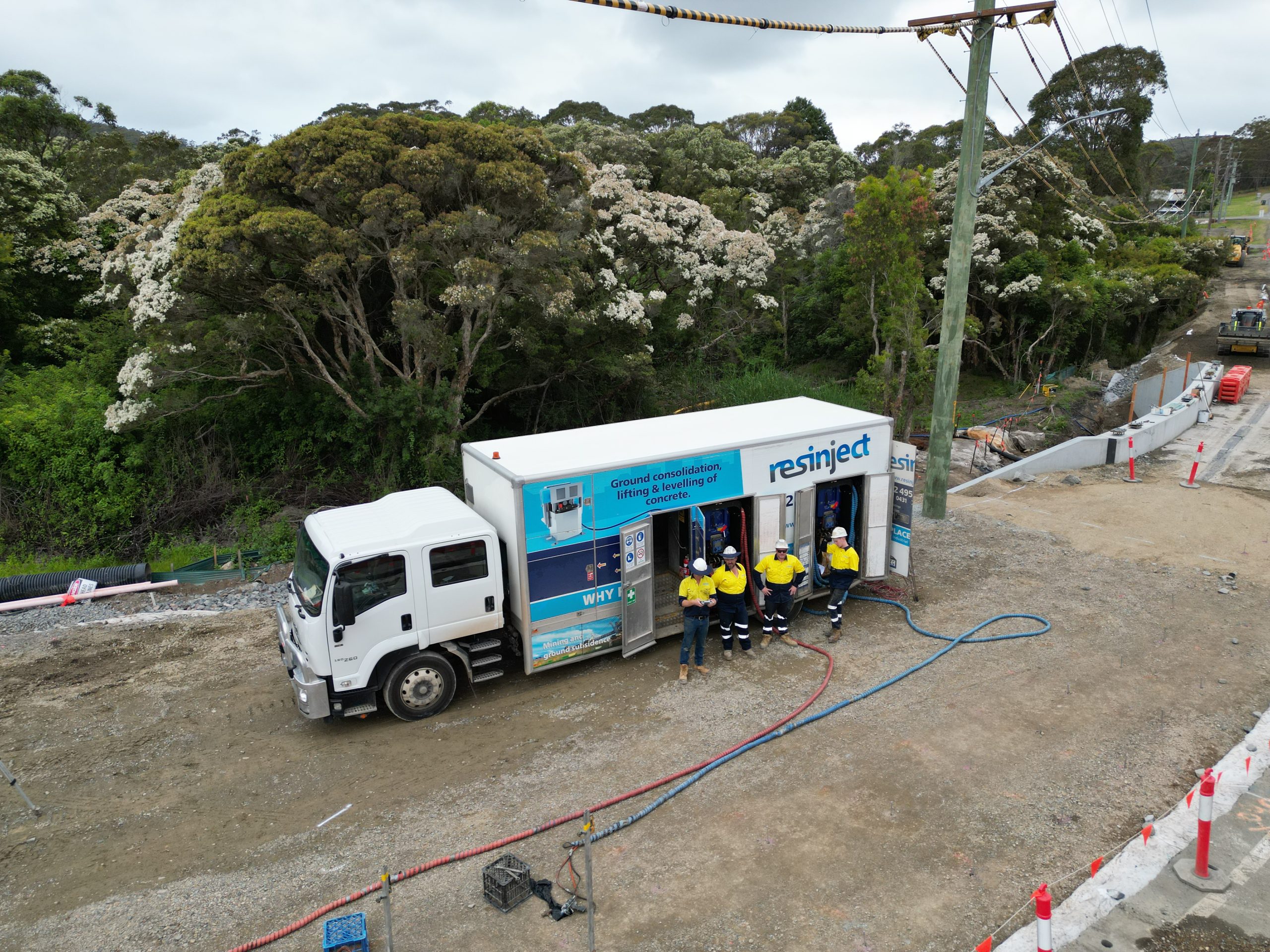
Resinject completed the injection program via a series of targeted injection points at varying depths as planned. Working together with a civil contractor who took care of traffic control, Resinject was able to ensure that there was minimal disruption to the usual flow of traffic in the area. No down time was associated with the project and work was completed within a single day.
After completing the injection program, when the contractor went to place material they had no issues with heaving/movement. This meant that it was now safe for the civil contractor to continue constructing their engineered fill and widening the adjacent roadway.