
Key points
- What it is: Soil stabilisation strengthens weak ground so it can carry loads and resist movement.
- Why it’s needed: Reactive clay, water from leaks or poor drainage, erosion, loose fill and underground voids all weaken ground.
- Main methods: Mechanical compaction, cement or lime mixing, chemical additives and expanding resin injection.
- Existing buildings: Resin injection stabilises ground under homes and slabs without major excavation. A site assessment confirms the right method.
What is soil stabilisation?
Soil stabilisation is any treatment that improves the strength or support of ground so it can carry loads and limit unwanted movement, such as settlement, heave or erosion. Ground stabilisation usually means the same thing, and the two terms are used interchangeably.
Foundation stabilisation applies the same principle beneath an existing building’s footings or slab. Strengthening soil is also different from filling a void or re-levelling a structure. A cracked, sinking home might need one of these treatments, or all three.
Why does ground become unstable?
Most instability comes back to water or weak material. Reactive clay swells when wet and shrinks as it dries. AS 2870 rates residential sites by expected ground movement, from stable Class A to extremely reactive Class E. Leaking pipes and poor drainage soften soil around footings, heavy rain causes erosion and washouts, and poorly compacted fill settles over time, sometimes leaving voids under slabs.
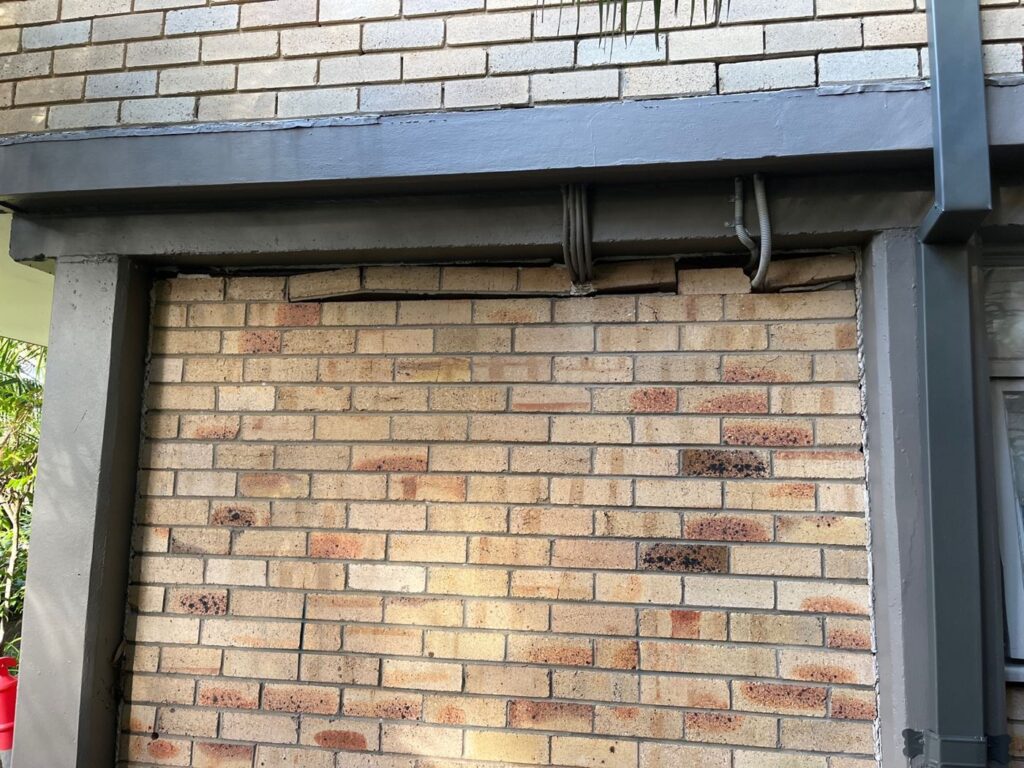
Above ground, this shows up as wall cracks that keep growing, uneven floors or concrete, and doors or windows that start to jam. These are classic signs of subsidence.
But the damage alone doesn’t reveal the cause. The same diagonal crack could come from a burst pipe, a drying clay profile or settling fill, and each needs a different fix.
Soil stabilisation methods compared
The right method depends on soil type, how deep the weak layer sits, site access, what’s being supported and what caused the movement.
Mechanical stabilisation
Weak soil is compacted with rollers or vibrating plates, dug out and replaced with better material, or strengthened with aggregate and reinforcement to form a stronger layer. It suits open sites. Under an existing structure, the excavation involved makes it disruptive or simply impractical.
Cement and lime stabilisation
Cement or lime is mixed into suitable soils to change how they behave. Cement binds particles into a harder layer, while lime reacts with clay to reduce plasticity. Both are established options for roads and new building sites, though not every soil suits them. Because they’re mixed through the ground in place, they generally can’t be used once a structure is built.
Chemical stabilisation
This broad category covers additives that bind soil particles or improve strength. Results vary with the product and the soil.
Expanding resin injection
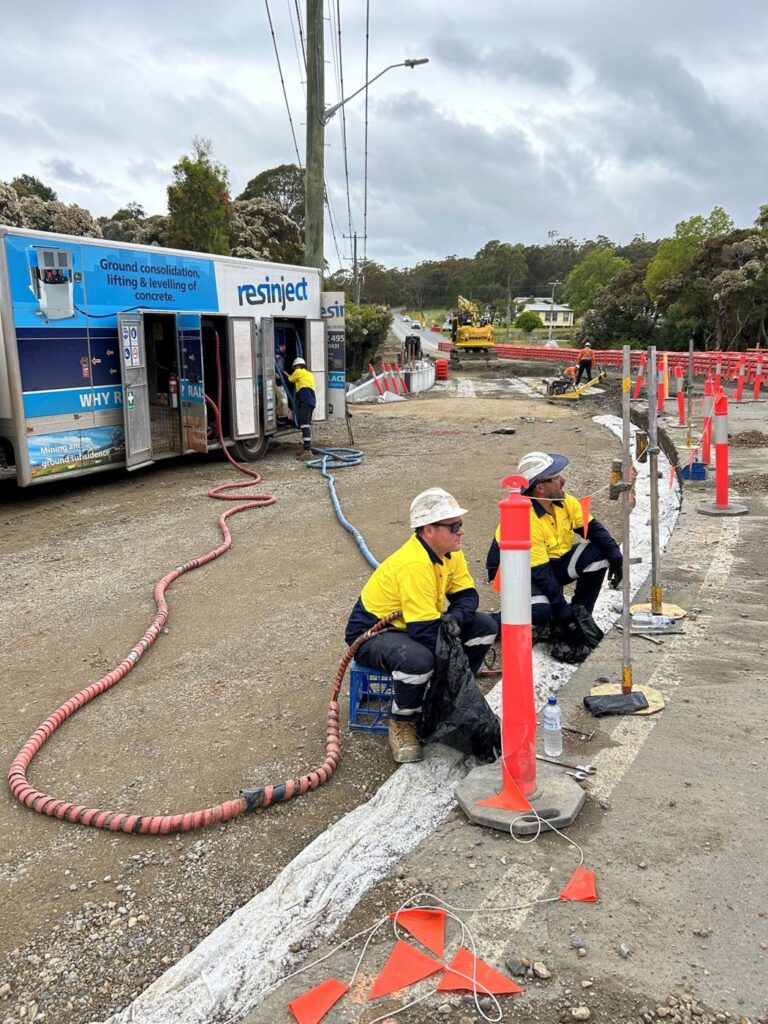
Polyurethane resin is injected through small drilled holes. As it reacts, it expands into weak soil to consolidate it and fills voids before curing. People commonly looking for ground stabilisation foam are usually after this engineered expanding resin, not household spray foam. Injection depth, spacing and volume are set for each site, so results depend on ground conditions.
Soil stabilisation methods at a glance
| Method | How it works | Best for | Works under existing structures? | Disruption |
|---|---|---|---|---|
| Mechanical | Compacts, replaces or reinforces weak soil | New builds, roads, open sites | Rarely, needs excavation | High |
| Cement | Mixed into soil to bind and harden it | Roads, pavements, building platforms | No | High |
| Lime | Mixed into clay to reduce plasticity and improve strength | Clay subgrades, roads | No | High |
| Chemical | Additives bind or strengthen soil particles | Varies by product and soil type | Limited | Moderate |
| Expanding resin injection | Resin injected through small holes expands to consolidate ground and fill voids | Existing homes, slabs, footings, pavements | Yes | Low |
Foundation stabilisation: stabilising ground under existing buildings
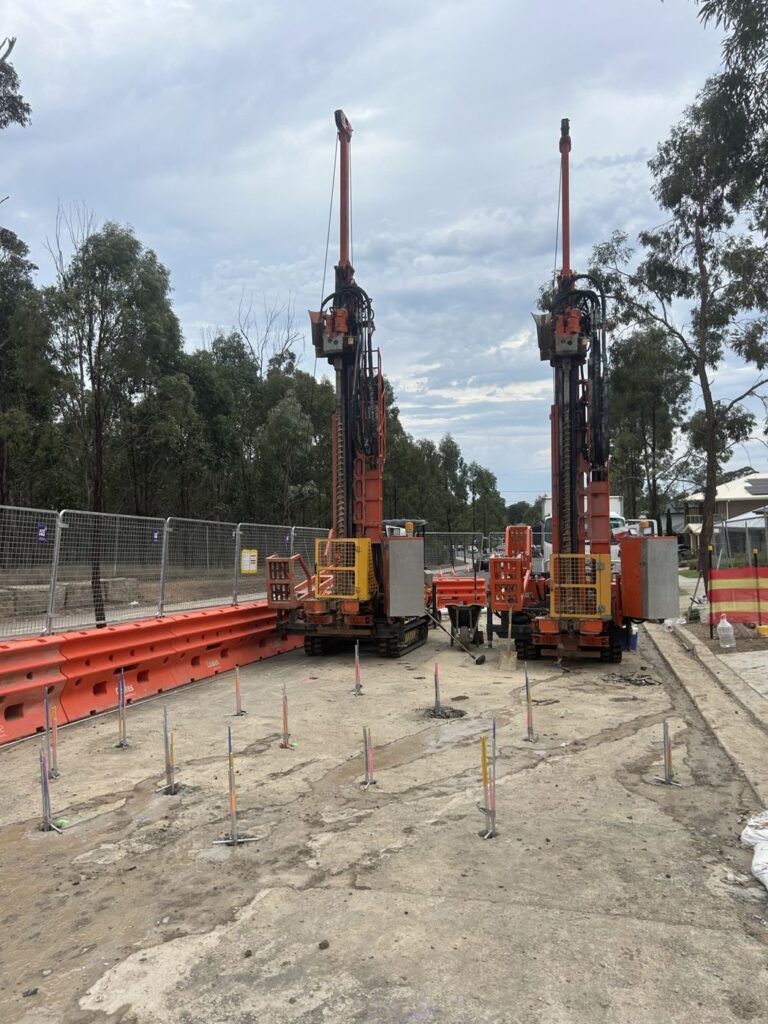
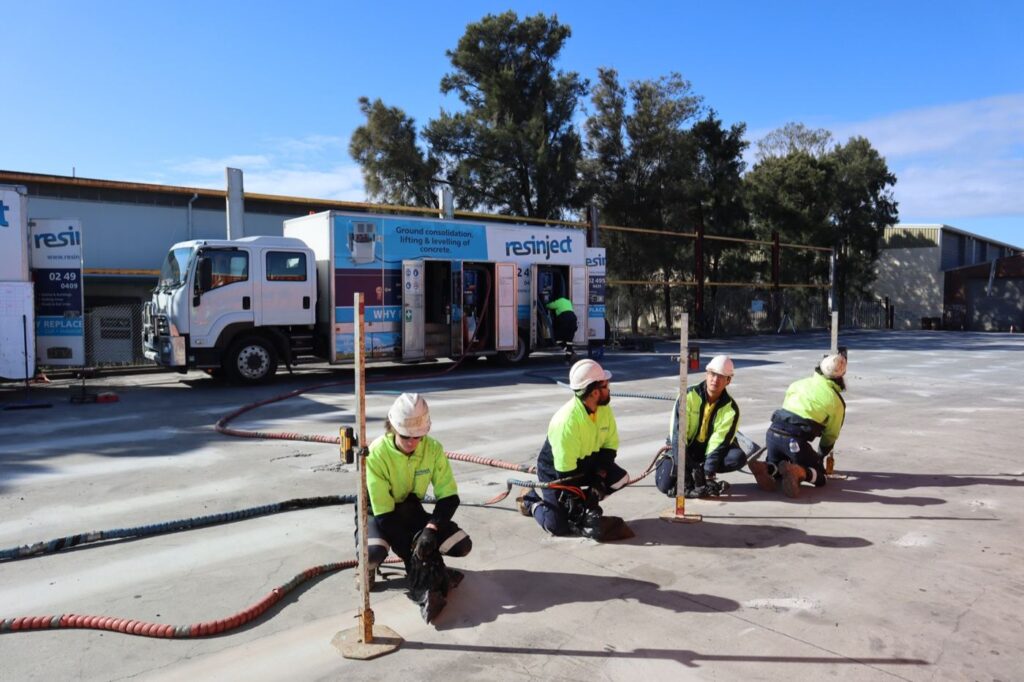
Compaction, lime and cement all need the ground exposed and worked. Once a home or slab sits on top, that means demolition or extensive digging. Targeted injection reaches the weak soil instead. With deep ground injection, resin is placed at set depths beneath footings and slabs through small holes, strengthening the bearing layer without major excavation. Resinject uses RSJ170, its Australian-made, certified resin.
This is a form of chemical underpinning. Traditional underpinning deepens or extends the foundation, while resin injection improves the ground it sits on. Where soil has washed away, void filling restores support under the slab, and controlled injection re-levels structures that have already dropped.
Where is soil stabilisation used?
- Homes and residential slabs showing cracks, sloping floors or sticking doors.
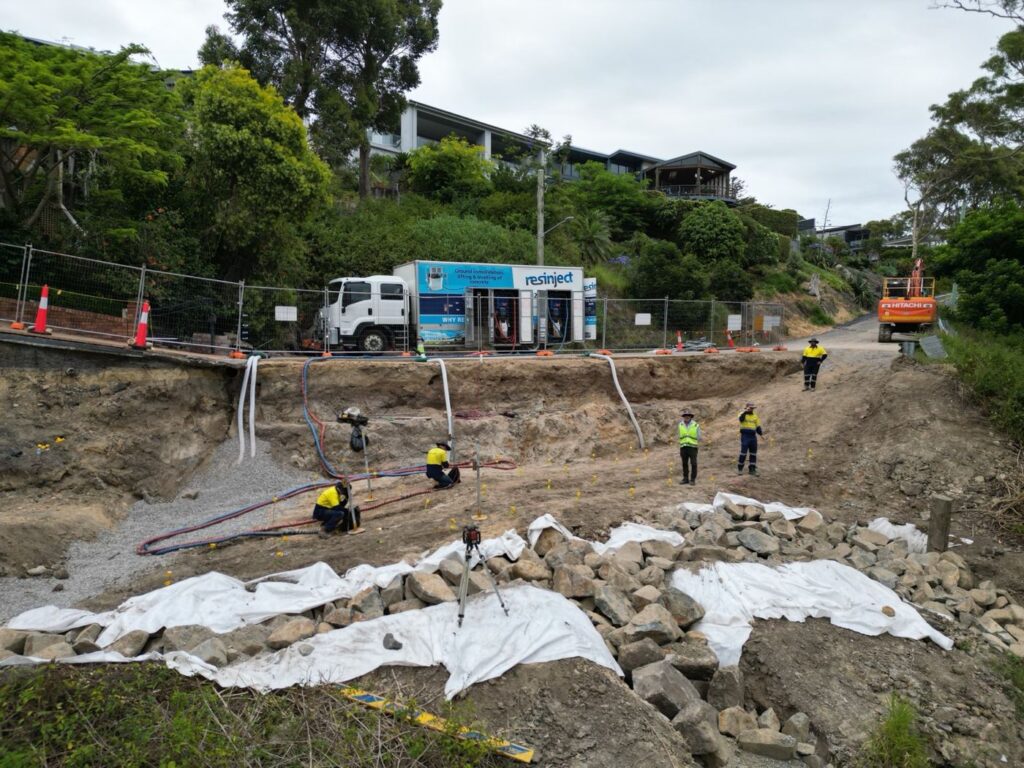
- Roads, pavements and washouts undermined by stormwater or creek flows.
- Slopes, embankments and revetment walls, where saturated or eroded soil threatens stability.
- Industrial and commercial floors carrying forklifts and racking, where sunken slabs create trip hazards and downtime.
Project example: Resinject’s road and creek bed stabilisation shows injection strengthening ground where water had eroded support beneath infrastructure.
How is the right treatment chosen?
Start with the source of movement. If a plumbing leak or blocked drain is still saturating the soil, stabilising the ground alone won’t solve the problem. Fix the water first.
A qualified site assessment then checks the structure, the extent of movement and ground conditions. Where needed, geotechnical information such as soil type and borehole data sets treatment depth and scope. Resinject offers a free structural assessment by licensed builders.
Frequently asked questions
Cost comes down to the treatment area, depth, site access, ground conditions and whether void filling or re-levelling is also needed. That’s why a site inspection comes before any quote.
Stabilisation strengthens the ground. Underpinning supports or deepens the foundation itself. Resin injection sits between the two, improving the soil a foundation bears on.
Yes. Targeted resin injection works through small holes beneath footings and slabs. Whether it suits your home depends on a site assessment of the structure and ground.
That depends on the method and whether the cause, usually water, has been fixed. RSJ170 carries a 50-year product warranty against shrinkage, but ground performance still relies on site conditions.
Ground stability is the soil’s ability to carry loads without excessive settlement, heave or erosion. Stable ground holds its shape and strength through wet and dry seasons.